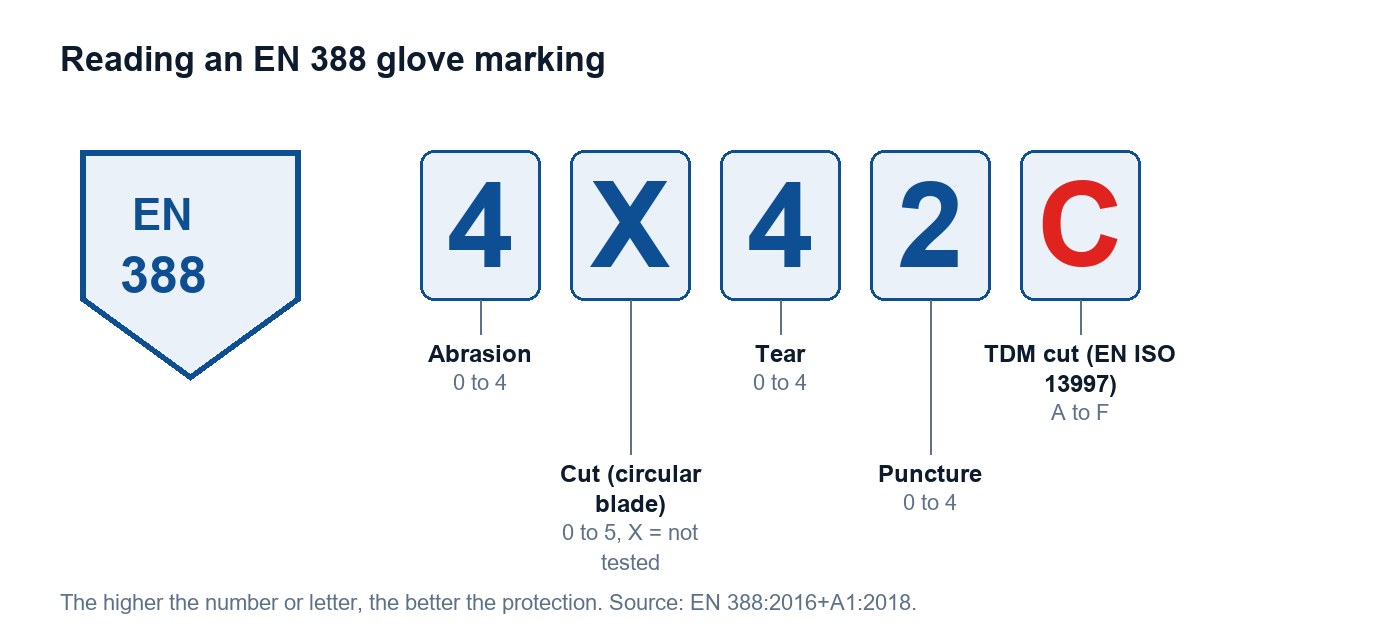
EN 388: mechanical risks
The hammer pictogram covers mechanical risks. Under it you will find up to six ratings, always in the same order:
| Position | Test | Scale |
|---|---|---|
| 1 | Abrasion resistance | 0 to 4 |
| 2 | Cut resistance (circular blade, "Coup test") | 0 to 5, or X if not applicable |
| 3 | Tear resistance | 0 to 4 |
| 4 | Puncture resistance | 0 to 4 |
| 5 | Cut resistance under EN ISO 13997 (TDM test) | A to F |
| 6 | Impact protection (optional) | P if passed |
The higher the number or letter, the better the performance. Example: 4543B means abrasion 4, cut 5, tear 4, puncture 3, TDM cut B. TDM letters range from 2 newtons (A) to 30 newtons (F). When the blade dulls during the circular test, the TDM result is the one that counts.
EN ISO 374: chemical risks
The flask pictogram shows chemical protection. The type depends on how many chemicals were tested and how long the glove resisted:
| Type | Requirement |
|---|---|
| A | At least 6 chemicals, at least 30 minutes each |
| B | At least 3 chemicals, at least 30 minutes each |
| C | At least 1 chemical, at least 10 minutes |
The letters under the pictogram identify the chemicals tested. They matter more than the type: a Type A glove may not resist the chemical you use. A separate pictogram shows protection against micro-organisms, with the word "virus" if the glove passed that test.
Questions to ask
- What are the real risks: cuts, punctures, abrasion, chemicals?
- Which chemicals exactly, and for how long?
- Is the requested level consistent with the price offered?
- Do the markings also appear on the certificate and instructions, for the same item?
How Omeria helps
We translate your needs into markings and standards, write them into the specification and check that they appear on the manufacturer's documents.
Sources
- Majestic, EN 388:2016+A1:2018 explained: www.majestic.nl
- Ejendals, EN 388 and ANSI/ISEA: ejendals.com
- ATG Glove Solutions, EN ISO 374-1:2016: atg-glovesolutions.com
- ERIKS, EN 374 chemical, micro-organism and virus gloves: www.eriks.com
- INRS (French occupational safety institute), Protective gloves fact sheet (FI 9): inrs.fr